“Are concrete islands going to?they were installed hanging in the driving lanes…duh!!!!”
Anonymous · Castle Hills Community Facebook comment · Sep. 16 post ↗
Happy Friday, CH residents!
I apologize for missing the meeting on the 19th; I had a mandatory parent booster golf meeting for my daughter at Hebron High School.
I’ve received feedback from many residents who attended the meeting and I also viewed the online post. I want to share my perspective and the opinions of others in the hope of concluding the calming project.
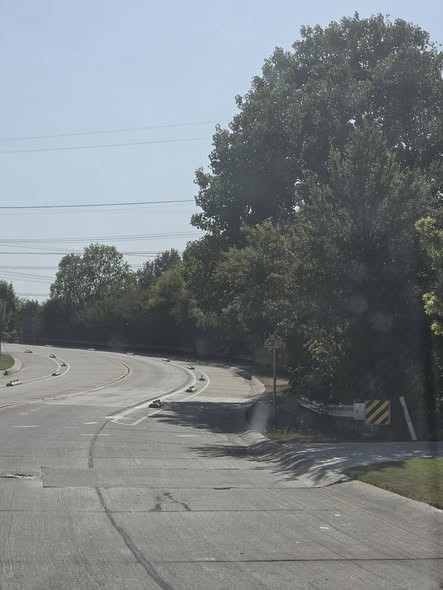
I remember we used to enjoy driving through the KA. KA Boulevard is the main thoroughfare through our community, stretching from the east to the west side of the neighborhood. This main street is characterized by beautiful tree-lined sections, both one-way and two-way streets, large and small medians, homes with various architectural designs, the wonderful Village Shops, the stunning views of Avalon Lake, and the exclusive guard-gated Enchanted Hill. As we cruise west on KA, we encounter friendly curves, golf course views, and tree-lined creeks, all contributing to the pleasant driving experience that CH is known for.
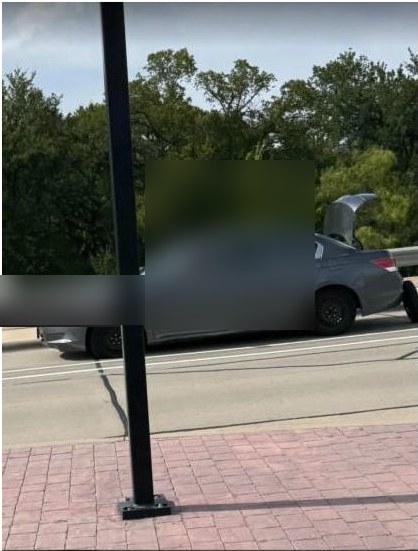
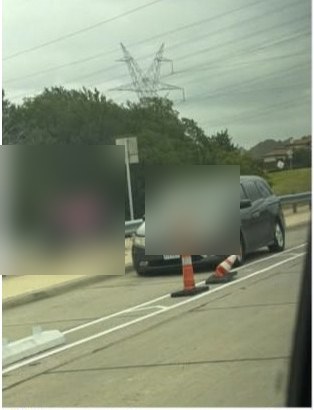
As a resident and a real estate agent who interacts with current and prospective residents daily, I believe we would prefer managing a few speeders on KA rather than contending with the mess we currently face. Multiple incidents have been reported, and we can only wonder how many other incidents have occurred at night due to concrete barriers or bumps.
Enchanted Hill, an exclusive guard-gated section with over 90 multi-million dollar homes and 11 lots remaining, is facing significant challenges due to the calming project. The bumps at the front entrance and the barriers at the rear entrance have made it a nightmare for large trucks needing to enter and exit. Eighteen-wheelers cannot navigate out freely without damaging those barriers! This design has caused serious problems.
Here are our suggestions:
1. Remove the bumps and barriers entirely; doing so will save more money than modifying them. These bumps & barriers shouldn't be in the first place.
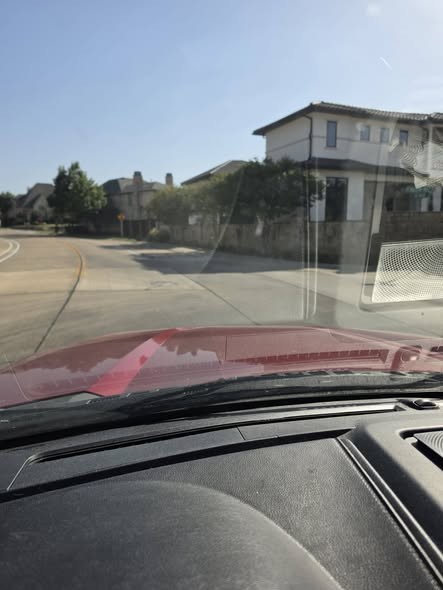
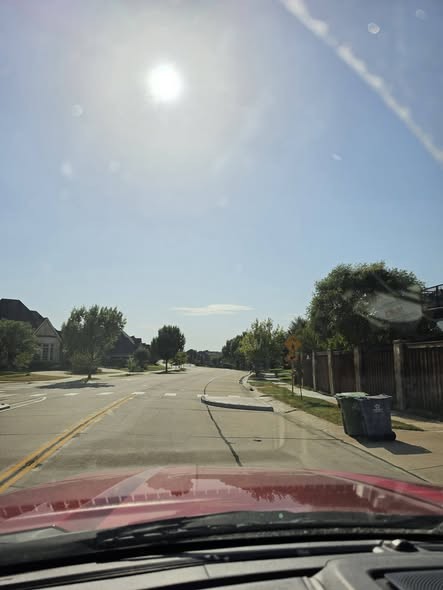
2. Be aware that driving west on KA in the evening exposes drivers to direct sunlight hitting their windshields, plus a lot of curves, so bumps & barriers will be a problem!
3. Do not assume that drivers hitting or crashing into the bumps or barriers are careless or distracted by their phones. Don't we all use GPS to find directions?
4. Restore CH’s aesthetic appeal and bring back the easy, friendly driving experience we used to enjoy.
5. There’s no need for bike lanes since the maximum speed limit for cars is 25 mph, which aligns with the speed at which bikes travel. We can all share the street.
6. Eliminate the clutter of unattractive, aggressive bike lane signs on the street and in front of houses. Home shoppers are likely to rule out homes on busy streets with designated lanes or parking. What will this do to home values?
7. Would these signs create a more welcoming atmosphere? Suggestions include: "Young kids riding bikes. Please slow down!" "Deaf person in the area." "We love walking in our neighborhood. Please drive carefully." "Heads up! Our amazing Village Shops are coming up!"
Anonymous · Castle Hills Community Facebook post · Aug. 21, 2026 ↗
“King Arthur is embarrassing.”
Anonymous · Castle Hills Community Facebook comment · Aug. 15 post ↗
“Traffic stressing instead of traffic calming.”
Anonymous · Castle Hills Community Facebook comment · Aug. 14 post ↗
“The crawl way strikes again”
Anonymous · Castle Hills Community Facebook comment · Aug. 14 post ↗
“Agree, it’s so ridiculous”
Anonymous · Castle Hills Community Facebook comment · Aug. 14 post ↗
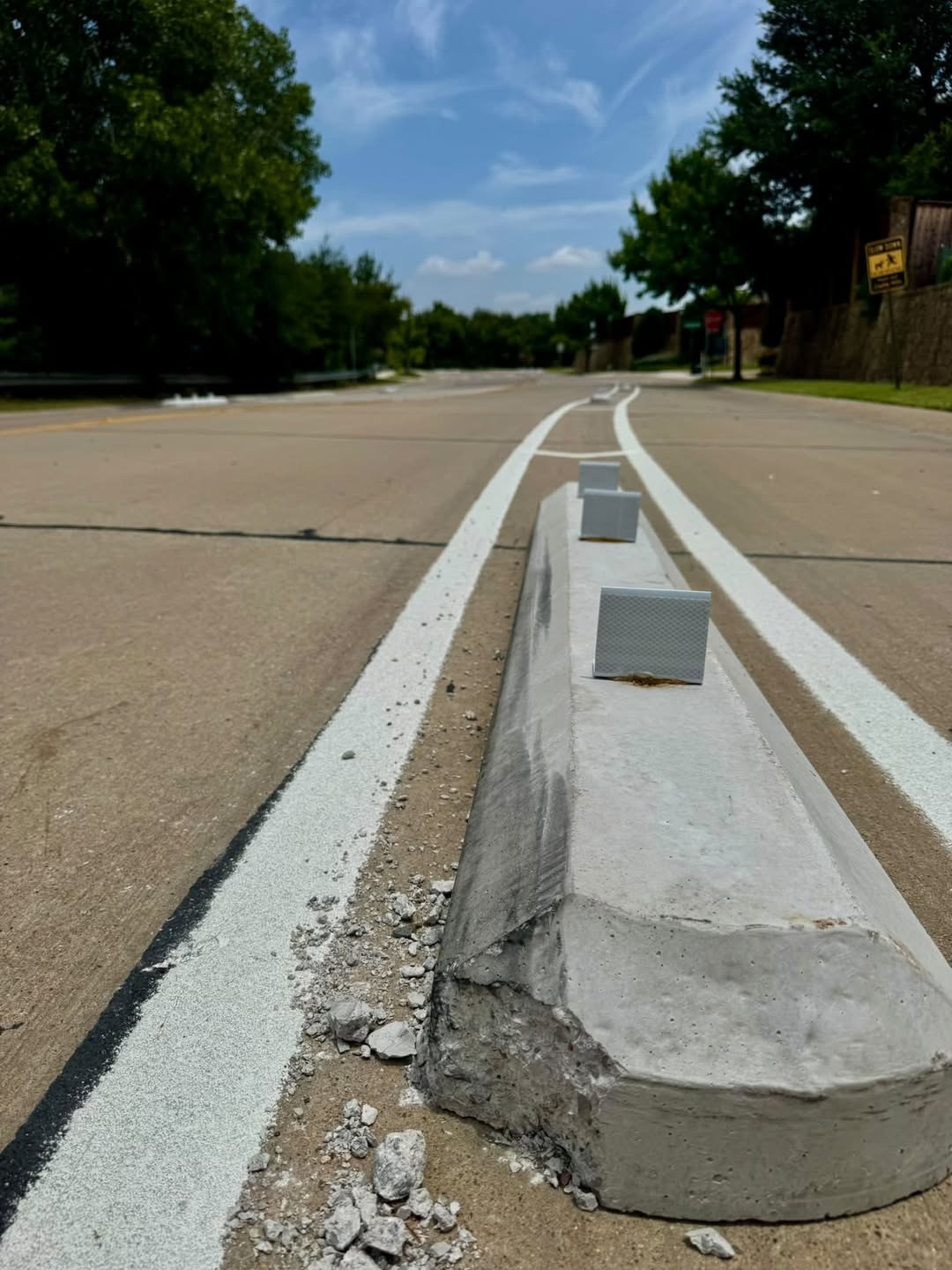
“It’s tacky and messy looking. The amount of damaged curbs with black marks, crumbling edges and torn away reflectors….the concrete dust that was left around the new very-bumped out curbs, the not-straight painted lines…adding on the golf carts now driving in the road, bikes not on the bike path and still not stopping at stop signs….
King Arthur is simply a mess.
We took a sweet community and have made it an overwrought joke
It’s stupid and embarrassing.”
Anonymous · Castle Hills Community Facebook comment · Aug. 14 post ↗
“King Arthur Chaos Project”
Anonymous · Castle Hills Community Facebook comment · Aug. 14 post ↗
“<redacted> - Yes, there are many other options that could have been implemented. I'd prefer ones that don't destroy cars, ruin aesthetics, and create more problems than they were supposed to "solve".”
Anonymous · Castle Hills Community Facebook reply · Aug. 12 post ↗
“<redacted>, exactly - I can't believe of all the choices to do this, somehow this not only got accepted, reviewed, and implemented - and one or two people defending the implementation baffles me, too.”
Anonymous · Castle Hills Community Facebook reply · Aug. 13 post ↗
“Colossal waste of money, dangerous and an eyesore.”
Anonymous · Change.org petition comment ↗
“The concrete barriers do more harm than good. Not to mention they are an eyesore in the heart of our neighborhood.”
Anonymous · Change.org petition comment ↗
“Going on King Arthur from old Denton its distressing to see ugly concrete barriers on both sides of the street. The streets are not wide enough if a car were to break down and the road looks so ugly with the barriers. It’s completely changed the look of this beautiful community.”
Anonymous · Change.org petition comment ↗
“I live in this community and putting a concrete barrier does not make sense
There are various better options to address.”
Anonymous · Change.org petition comment ↗
“My thoughts are same as everyone else's. These barriers have caused more harm than good. More accidents have taken place since installed, than there ever where, pre-installation.
In addition to the danger it's created, how about the horrible look! For a neighborhood who won't allow mailboxes (because it would ugly up the curb appeal), they sure threw that concept out the window when installing these barriers.”
Anonymous · Change.org petition comment ↗
“I feel the final outcome of the King Arthur traffic calming project significantly over-corrected in its effort to bring down the average auto speed. Instead it has had a negative impact in several measurable ways - not to mention how unattractive and unsightly the bump-outs and curb stops are. Surely data will support that more harm than good has been done. It’s ok to make mistakes, but now it’s time to come to the table to find a better solution.”
Anonymous · Change.org petition comment ↗
“The concrete barriers are an eye sore and definitely take away from the clean and classic look of what Castle Hills is suppose to reflect. It’s also a hazard in my opinion as they are awkwardly placed and see many dings in them already showing that many have been running into them.”
Anonymous · Change.org petition comment ↗
“It is just unnecessary, causes more harm then good. the bike lanes are great, leave them without the barriers. Lanes are just too tight in some areas, reflectors not effective. Overall look has really negatively impacted our beautiful neighborhood.”
Anonymous · Change.org petition comment ↗
“Those bumps are a serious hazard and need to be removed ASAP.”
Anonymous · Public Facebook comment ↗
“There are houses facing the street on the section of KA heading to Josey, so I’m not sure how they are going to do that.”
Anonymous · Public Facebook comment ↗
“No slide indicated that a physical barrier would be placed as protection for the bikers.”
Anonymous · Public Facebook reply ↗
“It is an absolute certainty that more thought went into the site than into the "calming" project and its execution.”
Anonymous · Castle Hills Community Facebook comment ↗
“Even those who support "calming" cannot think this was well planned and executed.”
Anonymous · Castle Hills Community Facebook comment ↗
“Incorporating a physical cement barrier that causes unsafe conditions is not an adjustment, that is a fundamental change of what is being delivered.”
Anonymous · Castle Hills Community Facebook reply ↗
“This poorly planned project has already negatively impacted real estate values and diminished the interest of new families wanting to move here!”
Anonymous · Castle Hills Community Facebook post ↗
“What’s happening here on KA is a joke! Castle Hills is known for its amazing curb appeal, beautiful tree-lined streets, and friendly community atmosphere. Instead of enhancing our neighborhood, we are facing concrete blocks, island bumps, sign clutter, and street reflectors!”
Anonymous · Castle Hills Community Facebook post ↗
“This is not traffic calming. This is straight-up negligence… and ugly as hell.”
Anonymous · Castle Hills Community Facebook post ↗
“A few loud voices couldn’t stand drivers “breaking the rule” of a 25 mph sign…. even though real-world speeds of 32-35 mph had been safe for 25 years. City data showed averages of just 31 mph with virtually zero serious accidents. So the city spent over a million dollars on virtue-signaling concrete and ugly signs to enforce blind obedience.”
Anonymous · Castle Hills Community Facebook post ↗
“They damaged the beauty of our neighborhood and turned it into a dangerous industrial eyesore.”
Anonymous · Castle Hills Community Facebook post ↗
“I like the idea of removing the barriers and putting rumble strips instead. Those barriers are the real eyesore IMO. Some of the signs could go too and that silly misplaced handicapped spot.”
Anonymous · Castle Hills Community Facebook comment · July 18 post ↗
“How ugly. We hardly ever go there but I totally agree. Chris Bright did make a lovely place here for us to live. Let it alone.”
Anonymous · Castle Hills Community Facebook comment · July 18 post ↗
“Those concrete barriers are not only an eyesore, they’re dangerous. Get rid of them and put In rumble strips. While they’re at it dig the bricks out of the bump outs and plant trees or low-maintenance bushes”
Anonymous · Castle Hills Community Facebook comment · Aug. 2 post ↗
“they need to get rid of the bump outs and paint lines like on Lady of the Lake and Windhaven”
Anonymous · Castle Hills Community Facebook comment · Aug. 2 post ↗
“I recently drove KA past LOTL for the first time and saw how ugly and absurd this KA Calming Project is. Fortunately I live off KA on Avalon further east and thankfully don't have to drive the KA obstacle course unless I'm going to someone's home in that area. ”
Anonymous · Castle Hills Community Facebook comment · Aug. 2 post ↗
“Not only did the city create an abomination on KA, but as predicted the concrete obstacles are extremely dangerous. As your incident shows, the KA project did not make anything safer for bicycles but only created more danger. It is sad that we have residents supporting this tax-money wasting project.”
Anonymous · Castle Hills Community Facebook comment · Aug. 2 post ↗
“I have lived in CH since 8/99 and this is absolutely the worst community disaster ever.”
Anonymous · Castle Hills Community Facebook comment · Aug. 2 post ↗
“ridiculous that they would create a bike lane to protect bikers and yet fill it with obstacles that force them cyclist into the road. Absolutely moronic. And I agree with the previous comment… Our neighborhood is filled with young drivers. I have three sons that learned to drive in this neighborhood and I’m so grateful for the broad roads that gave them room to learn. I feel sorry for all the kids right now trying to figure this out.
”
Anonymous · Castle Hills Community Facebook comment · Aug. 2 post ↗
“per the TxDoT best practices the lane should be a minimum of 10ft ours is less than 8ft and 2 way. But the COL did not follow TXDOT guidelines.”
Anonymous · Castle Hills Community Facebook comment · Aug. 2 post ↗
“Get rid of them now”
Anonymous · Castle Hills Community Facebook comment · Aug. 2 post ↗
“I find it interesting how much of this new "accommodating" infrastructure seems more concerned with signaling exclusion and barrier rather than accommodation. I dont' ride my bike much anymore, but these bump-outs would be a really sore spot for me as a cyclist trying to get around. One of my favorite things about this neighborhood as a kid was the smooth curbs. We didn't have those in my old neighborhood and they were the cause of more than one crash.”
Anonymous · Castle Hills Community Facebook comment · Aug. 2 post ↗
“Really, it just feels like Lewisville coming to roost in our neighborhood. These bump-outs and curbs feel very "municiple" and standardized in a way our neighborhood has proudly managed to avoid being for a long time.
What's really absurd is that this huge project is because the 85th percentile speed clocked on King Arthur was...32 mph. In a 25. That's a paltry overstep and not a call for what could easily be classified an emergency public work. Frankly, the only reason the speed limit isn't 30mph is because Chris Bright wanted to mimic Highland Park in the stupidest of ways.”
Anonymous · Castle Hills Community Facebook comment · Aug. 2 post ↗
“They could have at the very least installed these with eased curbs like every other curb in the neighborhood.”
Anonymous · Castle Hills Community Facebook comment · Aug. 12 post ↗
“I hate it too.. thing is I never see bike riders in our neighborhood every once in a while..
and yes more and more money out of our pockets…”
Anonymous · Castle Hills Community Facebook comment · Aug. 12 post ↗
“I am genuinely sad to see the negative impact this “project” continues to have on my neighbors.”
Anonymous · Castle Hills Community Facebook comment · Aug. 12 post ↗
“But I also have no idea how they provide any added safety; they seem functionally useless to me. So, what bothers me is that apparently it cost millions of dollars for something useless.”
Anonymous · Castle Hills Community Facebook comment · Aug. 12 post ↗
“I hate those damn things!”
Anonymous · Castle Hills Community Facebook comment · Aug. 12 post ↗
“Yes, there are many other options that could have been implemented. I'd prefer ones that don't destroy cars, ruin aesthetics, and create more problems than they were supposed to "solve".”
Anonymous · Castle Hills Community Facebook comment · Aug. 12 post ↗
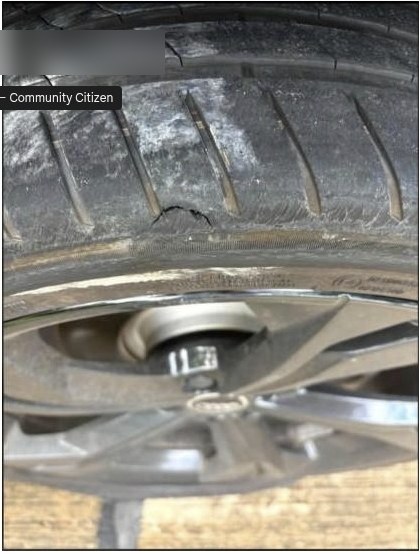
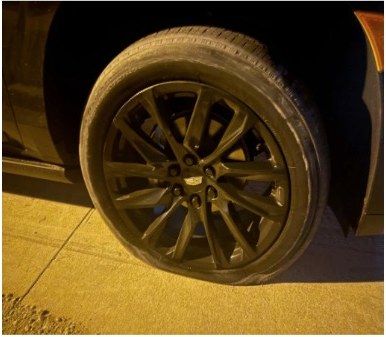
“Instead of these ugly monstrosities, medium size smooth speed bumps in the far right lanes would have accomplished the same thing...probably for less money. If someone drifted a few inches they would hit the speed bump and instead of having a damaged car or blown out tire in 100 plus degree weather, or a broken collar bone!”
Anonymous · Castle Hills Community Facebook comment · Aug. 12 post ↗
“I’m really disappointed with the changes the city has made, especially when they can lead to situations like this and create such a financial burden for residents. I hope we can all come together, raise our concerns, and encourage the city to reconsider and remove this. If enough of us speak up together, hopefully we can make a positive change for our community.”
Anonymous · Castle Hills Community Facebook comment · Aug. 12 post ↗
“I support this effort to change unsafe road hazards and to address the issue that this was nothing more than spending the Lewisville taxpayer's money on the Mayor's pet cycling project. Further, it sheds accountability on the failure of the Lewisville Police Chief to oversee the traffic division and their lack of enforcement of this area, thus resulting in serious resident injuries. I trust that the residents of the Castle Hills area of Lewisville will strongly support the removal of the Lewisville Mayor and the Castle Hills city councilman for being a detriment to the city.”
Anonymous · Change.org petition comment ↗
“It actually created a problem we haven’t had before and didn’t solve the big issues. Just poor decisions all around.”
Anonymous · Castle Hills Community Facebook comment · Aug. 12 post ↗
“Why do we live in Legoland”
Anonymous · Castle Hills Community Facebook comment · Aug. 13 post ↗
“Replace the concrete curbs with rumble strips. Dig out the bricks from the bump outs and plant trees or easy-to-maintain shrubs. That’d go a long way to solving the problem.”
Anonymous · Castle Hills Community Facebook comment · Aug. 12 post ↗
“It’s tacky and embarrassing. This is a good lesson. It never occurred to me the neighborhood we bought into could chose to make such a strange alteration. It makes me have less faith in the the town.”
Anonymous · Castle Hills Community Facebook comment · Aug. 13 post ↗
“If you take the time to read all the new signs, you won’t even notice the road!🤣🤣🤣🤣”
Anonymous · Castle Hills Community Facebook comment · Aug. 13 post ↗
“It’s hard to believe that even the 2 people that support it could like it.
If only the planners had heard of the internet. A quick search yields:
These concrete curbs create several problems:
• They sit low and blend into the pavement, especially at night.
• Headlight glare, rain, leaves, ice and snow can make them extremely difficult to see.
• A bicycle tire striking one can stop or deflect the wheel instantly, causing a serious fall.
• They leave cyclists very little room to avoid an obstacle or recover.
• Vehicles can suffer tire, wheel, suspension and underbody damage.
• Snowplows must maneuver around them and can strike, damage or displace the concrete.
• Snow and debris can collect around them, reducing visibility and usable road width.
• They create difficulties for emergency vehicles, school buses, delivery trucks and trailers navigating the narrowed, curved lanes.
• The small reflectors are not an adequate substitute for tall, highly visible delineator posts.
Other cities have experienced problems with similar installations:
• Boston removed concrete bike-lane curbs after motorists repeatedly crashed into them and replaced them with flexible posts.
• Portland removed 2,500-pound concrete traffic-calming planters after frequent collisions.
• Vista, California, removed newly installed bike-lane barriers after residents reported that they created traffic hazards.
National street-design guidance recommends pairing low concrete barriers with tall flexible posts so they remain visible at night and after snowfall. It also recognizes that precast curbs can be displaced by vehicle impacts and damaged by snowplows.
Traffic calming should make our neighborhood safer—not introduce low, unforgiving concrete obstacles that are difficult for cyclists and drivers to see. Given that a cyclist has already suffered a broken collarbone, the City of Lewisville should immediately conduct a formal safety review, install tall delineator posts and prominent warning markings as an interim measure, and determine whether these concrete barriers should be redesigned or removed before someone else is seriously injured.
Boston example: https://mass.streetsblog.org/.../building-back-flimsier...
Portland example: https://bikeportland.org/.../concrete-planters-for...
Vista example: https://www.cbs8.com/.../509-5294831b-df6b-4533-aa7a...
Design guidance: https://nacto.org/.../separating-protected-bike-lanes/”
Anonymous · Castle Hills Community Facebook comment · Aug. 13 post ↗
“<redacted> ~ they are just so weird! Not necessary and they leave not an inch to move.
In some some sections there is curbing on both sides of the road-no ability to pull over for an emergency etc.
What if an emergency vehicle needed to pass?? No one can pull over??
People unfamiliar with our neighborhood are not understanding that we have created a driving gauntlet-
With no extra space, I’ve been stuck driving behind golf carts, and unbelievably BIKERS.
Since you’ve only driven it twice I understand your question-I drive it at least 6 times a day and it’s annoying and embarrassing.
With homes over a million dollars, the damaged curbs and crumbling bumpouts are ruining the charm of KA.”
Anonymous · Castle Hills Community Facebook comment · Aug. 30 post ↗
“This is so infuriating! Everybody wonders why people hit them… because it’s not normal road design!  completely unexpected and ridiculous. I was driving behind someone the other day that was hugging the yellow line the whole way down the road and effort to stay far away from those stupid hazards. Imagine someone coming the opposite direction and trying to give them some space? You wonder why people hit them! It’s a ridiculous design. And I was at the August 19 meeting… It has made no appreciable impact on the speed on King Arthur. So if the goal was to slow people down… Other than the 45+ cars with damage… It hasn’t made any difference at all! They need to reverse this mess. It is both hazardous and hideous! #MKAGA”
Anonymous · Castle Hills Community Facebook comment · Aug. 30 post ↗
“I live closer to Josie and on Josie. They are two lanes and either direction with a median in the middle with grass and trees. Now that makes sense! And when you get to where the houses are the street narrows into one lane. The street isn’t even marked and we don’t have any problem. Why didn’t they do the same thing on the other side? Instead of forcing the cars to the center they should’ve put a median in the middle. If people hit a normal curb, (which rare to never happens) it still does its job without damaging the vehicle. But those parking curbs are disastrous.  this idea that these curves are saving life is absolutely insane. I’ve been in this neighborhood for 20 years and there’s never been a safety issue for pedestrians anywhere especially not on King Arthur. So to make this about pedestrian safety is ridiculous. ”
Anonymous · Castle Hills Community Facebook comment · Aug. 30 post ↗





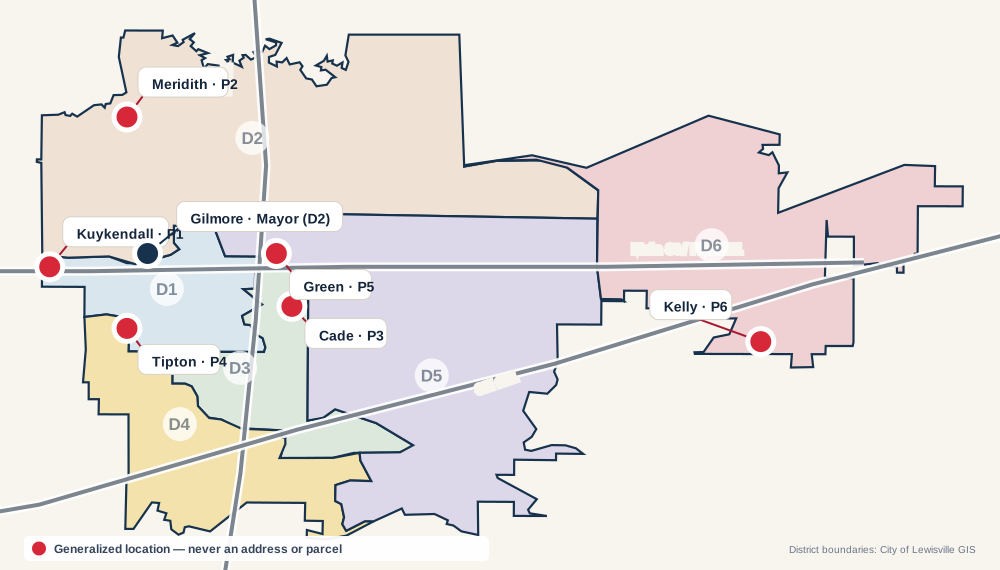
City Quotes
Straight from our City Officials
Public statements and meeting remarks are organized by official. Each quotation includes source context; meeting clips are excerpts from the official Aug. 19 recording.
Mayor
3 statementsBefore live testimony began, Mayor TJ Gilmore summarized the emails, letters and blue cards residents submitted offline, stated that every Council member had received the written comments, and entered each submission’s broad position into the meeting record. The clip runs from his explanation of that process through the transition to the first live speaker.
Open the official meeting record ↗Mayor TJ Gilmore rejected social-media claims that staff used the meeting presentation to impede communication. He said staff needed to present the information and background so Council could make an informed decision. The clip is excerpted from the official meeting recording.
Open the official meeting record ↗In his closing remarks, Mayor TJ Gilmore agreed that the project should change but declined to support restoring King Arthur to its pre-project configuration. He supported Option 3, further resident feedback and a search for a middle-ground design. The clip contains his complete closing remarks before Council moved to the next agenda item.
Open the official meeting record ↗Councilmember Place 1
1 statementCouncilmember Brent Kuykendall supported staff’s proposed bump-out modifications and rumble strips while also speaking in support of providing a bicycle lane. The clip is excerpted from the official meeting recording.
Open the official meeting record ↗Councilmember Place 2
1 statementCouncilmember William J. Meridith supported Option 3, including rumble strips, removal of the bike-lane barriers and proposed changes to the bump-outs. The clip is excerpted from the official meeting recording.
Open the official meeting record ↗Councilmember Place 3
1 statementMayor Pro Tem Ronni Cade criticized what she described as laughter following discussion of a cyclist being hit. During the resulting exchange, the official video shows residents leaving the chamber; Cade acknowledged that people were clearing out. The clip is excerpted from the official meeting recording and preserves the exchange in context. Multiple residents have reviewed the recording and have been unable to confirm what councilmember place 3 was referring to in her accusation
Open the official meeting record ↗Councilmember Place 4
1 statementDeputy Mayor Pro Tem Lonnie Tipton described three deliberate drives in different vehicles. He said he almost hit a bump-out in his SUV and later struck something in his pickup after becoming distracted. He did not identify what the pickup struck, so this entry does not characterize it as a barrier impact. The clip is excerpted from the official meeting recording.
Open the official meeting record ↗Councilmember Place 5
1 statementCouncilmember Kristin Green said the roadway’s width and straight alignment communicate speed to drivers, while noting that participants shared safety as their priority. The clip is excerpted from the official meeting recording.
Open the official meeting record ↗Councilmember Place 6
16 statementsThis is the earliest project-related statement located in the captured Facebook record. Council Member Place 6 described resident complaints, increased enforcement, a City review, and possible structural traffic-calming measures.
Find the Dec. 2022 Facebook post ↗Council Member Place 6 announced the November 2024 public meeting and characterized King Arthur traffic concerns as decades old. The entry uses the meeting date because the Facebook capture did not expose a reliable post date.
Find the 2024 public-meeting post ↗Council Member Place 6 previewed the consent-agenda construction award and described the project as responding to long-running speeding and multimodal-safety concerns. The official award occurred April 6, 2026.
Find the construction-award Facebook post ↗In this pre-construction post, Council Member Place 6 summarized the physical design and said the City had worked with HOAs, schools, and residents. The available capture did not expose an unambiguous calendar date, so the entry does not invent one.
Find the pre-construction Facebook post ↗Council Member Place 6 argued that enforcement alone was not producing the desired behavior and presented the King Arthur project as a complementary tool. The post described the data as covering the prior 75 days, placing it in mid-May; the capture did not expose an exact date.
Find the enforcement-data Facebook post ↗Council Member Place 6 listed seven asserted communication channels, rejected the claim that there had been no notice, and said the City could consider tweaks while preserving the project. This is retained as his public account; it is not treated as independent proof that every resident received notice.
Find the June 24 Facebook post ↗This separate late-June post followed Council Member Place 6's own drive through the work. He again defended prior outreach while asking residents to suggest additional communication methods. The capture did not expose an exact date, so it is not assigned one.
Find the late-June communication post ↗This is the statement the prior page omitted. Council Member Place 6 expressly said he voted for and supported the King Arthur project, defended the communication record and design changes, and said openness to adjustments should not be read as opposition.
Find the July 1 Facebook statement ↗Council Member Place 6 posted this reply in the public thread where residents were collecting King Arthur incident information. It is included because it addressed how project concerns should be documented.
Open the July 23 public comment ↗Council Member Place 6 posted this after residents asked whether King Arthur traffic calming would continue to Josey Lane. In a later comment he distinguished the regional trails vision from the traffic-calming project.
Open the Aug. 2 public comment ↗Council Member Place 6 said the NCTCOG map was an aspirational regional network, not a City construction page, and urged residents to subscribe to City newsletters and participate when a local design is presented.
Open the Aug. 2 trails comment ↗This was Council Member Place 6's reply to criticism of the public-engagement process. It presents his position that residents had meaningful opportunities to participate before construction.
Open the public-input reply ↗Council Member Place 6 characterized the ADA work as a second project coordinated with traffic calming and encouraged residents to review Council agendas. The City's own June 2025 memo and later bid documents should be used to test that characterization and the unreconciled ramp counts.
Open the budget and ADA reply ↗Council Member Place 6 said the upcoming meetings concern the $4.9 million voter-approved component, while the $15–$23 million estimate belongs to the broader Castle Hills corridor vision. He connected that broader vision to the Healthy Infrastructure initiative and Lewisville 2025 Vision process, described the bond proposal as citizen-developed and voter-approved, and said details outside the funded component have not yet been developed. These are the Council Member’s public explanations; the linked official project records remain the controlling sources for scope and authorization.
Open the Aug. 19 Castle Hills Trails post ↗In his latest post-meeting recap, Council Member Place 6 identified his 26 years in Castle Hills and citywide Place 6 role, supported removing the concrete bike-lane separators in favor of rumble strips, pulling back the Lady of the Lake bump-out, improving striping, and exploring landscaping. He said he remained supportive of the project’s safety goals and that staff would return with a plan and budget for discussion at an open meeting.
Open the Aug. 19 post-meeting recap ↗Councilmember Place 6 said he did not support commissioning another safety study and instead supported staff’s Option 3, including replacing the concrete bike-lane separators with rumble strips and pulling back the Lady of the Lake bump-out. The clip is excerpted from the official meeting recording.
Open the official meeting record ↗